International Tequila Day · July 24

One spirit. A world of toasts.

Born from blue agave and Mexican craft. Raised in glasses around the globe. On July 24, we celebrate tequila—and the people, places, and traditions behind every pour.

Until International Tequila Day in Mexico

000Days
00Hours
00Minutes
00Seconds

Now lighting upTequila · JaliscoNo public event yet. Bring the celebration to your city.Host an event ↗Drag in any direction · Scroll to zoom · Every city is clickable.

Host an event ↗
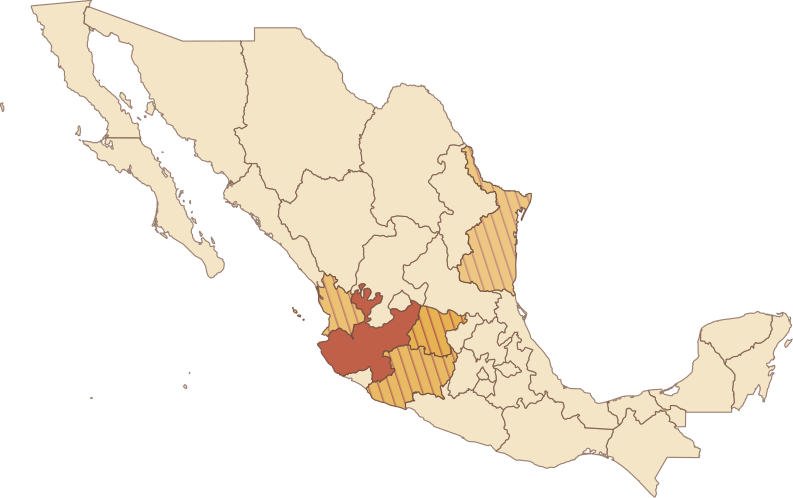
Map of Mexico highlighting Jalisco, Guanajuato, Michoacán, Nayarit and Tamaulipas

Rooted in Mexico

A toast that begins years before the bottle.

Tequila begins as agriculture, not alcohol. Blue agave spends years rooted in Mexican soil before growers and jimadores decide it is ready. From there, cooks, millers, fermenters and distillers turn the harvested piña into spirit. Its name belongs to that whole chain of land, knowledge and labor—not simply to a flavor in a glass.

That is what International Tequila Day celebrates: the patience behind the pour, the communities behind the category, and Mexico’s right to define and protect one of its most recognized cultural products.

5–8yearsThe journey from field to finished tequila can take most of a decade. Agave carries the longest part of that wait, growing before it can be harvested.
5statesAll of Jalisco and designated municipalities in Michoacán, Tamaulipas, Nayarit and Guanajuato form the protected territory.
1974protected in MexicoTequila became Mexico’s first Denomination of Origin, tying the name to geography, natural conditions and knowledge passed through people.

Sources: Tequila Regulatory Council ↗ · World Intellectual Property Organization ↗

Territory: Tequila Regulatory Council ↗ · Map geometry: svg-maps, CC BY 4.0 ↗

A living inheritance

Made by a place. Carried by its people.

Long before tequila became an international symbol, agave shaped food, fiber, ritual and fermented drink in Mesoamerica. In Jalisco, that relationship grew into a living landscape of fields, towns, haciendas and distilleries.

01 · The land

Two thousand years beneath the blue rows.

Agave has been used in this region for at least two millennia. Today’s tequila landscape carries that history forward, joining ancient knowledge of cooking and fermenting agave with distillation methods introduced from Europe. UNESCO recognizes it as a living World Heritage cultural landscape—not a museum piece.

Explore the World Heritage landscape ↗
02 · The people

Knowledge lives in skilled hands.

Growers tend blue agave for years. Jimadores read when each plant is ready, then use the sharp, round coa to remove its leaves and reveal the piña. Cooks, millers, fermenters, distillers and many others carry the work onward—knowledge refined through practice and often across generations.

03 · The culture

From regional spirit to national symbol.

Tequila appears at family tables and public celebrations, and across Mexican literature, film, music, dance and visual art. In 2026, Mexico’s Congress established July 24 as National Tequila Day. We share that date as International Tequila Day: the same celebration, rooted in Mexico and widened to the world.

July 24 in Mexico · Read the CNIT announcement ↗

After more than five decades as a jimador, Ismael Gama Rodarte described the pride of knowing that his work travels around the world.

A family of spirits

Make room at the table.

Tequila opens the door to a much larger landscape. Across Mexico, many agaves, regions, and methods create spirits with their own identities. Celebrating well means tasting beyond the familiar—and learning who made what is in your glass.

Blue Weber agave illustration01

Tequila

Bright, precise and unmistakably Jaliscan—blue agave transformed by fire, time and craft.

Inside the spirit

A protected Mexican spirit distilled from cooked and fermented blue Weber agave. Its identity is inseparable from its authorized territory and tightly defined production standard.

Plant
Only Agave tequilana Weber blue variety may be used.
Home
All of Jalisco plus designated municipalities in Guanajuato, Michoacán, Nayarit and Tamaulipas.
Making it
Mature piñas are cooked, their sugars extracted and fermented, then distilled. The field-to-bottle journey can take five to eight years.
Read the bottle
“100% agave” means every fermentable sugar came from blue agave. Blanco, Joven, Reposado, Añejo and Extra Añejo describe treatment or maturation.
Espadín agave illustration02

Mezcal

Smoke is only the beginning—a vast world of agaves, landscapes and fiercely individual makers.

Inside the spirit

Mezcal is not one flavor or one agave. It is a protected family of regional spirits whose character changes with species, landscape, fermentation and the hand of the maker.

Plant
Many permitted agave species are used. Espadín is widespread, but it represents only one part of mezcal’s diversity.
Home
Produced within protected municipalities across several Mexican states, with Oaxaca its best-known center.
Making it
Agave is cooked, milled, fermented and distilled. The equipment and process distinguish Mezcal, Mezcal Artesanal and Mezcal Ancestral.
Read the bottle
Joven, Madurado en Vidrio, Reposado and Añejo describe what happens after distillation. Smoke is a possible note—not the definition.
Agave maximiliana illustration03

Raicilla

Wild-hearted Jalisco—fragrant, earthy and shaped by coast, mountain and tradition.

Inside the spirit

A western Mexican agave spirit with its own denomination of origin since 2019. Mountain and coastal traditions produce strikingly different expressions under one name.

Plant
Varies by zone: maximiliana is important in the sierra, while angustifolia and rhodacantha are associated with coastal production.
Home
Sixteen municipalities in Jalisco and Bahía de Banderas in neighboring Nayarit.
Making it
Mature agave heads are cooked, fermented and distilled in small tabernas. Local ovens, mills and stills give each area its signature.
Find its character
Sierra examples can lean green, floral and peppery; coastal styles often show ripe fruit and earth. Producer and village matter.
Pacific angustifolia agave illustration04

Bacanora

Sonora in a glass—lean, mineral and desert-born, with generations of quiet resilience.

Inside the spirit

Bacanora is Sonora’s denomination-protected agave spirit: historically discreet, deeply regional and built around one desert-adapted agave.

Plant
Agave angustifolia Haw., commonly called pacífica or yaquiana in Sonora.
Home
Its protected production area covers 35 municipalities in the state of Sonora.
Making it
Piñas are cooked, crushed, fermented and distilled—traditionally at small scale and frequently with wood-fired heat.
Find its character
Look for roasted agave, dry herbs, minerals and pepper. It is its own spirit, not simply a “smoky tequila.”
Dasylirion desert spoon illustration05

Sotol

Not agave, but desert spoon—herbal, dry and untamed, carrying northern Mexico’s high desert.

Inside the spirit

Sotol belongs at the table, but not in the agave family. It is distilled from Dasylirion—desert spoon or sereque—and carries the ecology of northern Mexico in a very different voice.

Plant
Dasylirion species, commonly Dasylirion wheeleri. Botanically it is related to agave, but it is not an agave.
Home
The Mexican denomination of origin covers Chihuahua, Coahuila and Durango.
Making it
The heads are harvested, cooked, milled and fermented, then commonly distilled twice—a process with parallels to agave spirits.
Find its character
Herbal, grassy, resinous, peppery or mineral: good Sotol speaks more of high desert than smoke.

Your July 24

How will you raise it?

There is no single ritual for International Tequila Day. Make it a moment of discovery: go out, bring a bottle home, gather your people—or simply ask a better question about what is in your glass.

At the bar

Order with curiosity.

Ask for tequila neat, in a small flight or in a cocktail that lets the spirit speak. A good bartender can introduce you to a producer, region or style you have not met before.

Try · neat · highball · classic cocktail Explore cocktail bars ↗
Bring a bottle home

Choose it. Then read it.

Look for 100% agave, the producer, the NOM and the place it was made. Let the label begin the story—not finish it.

Research your bottle ↗
Bring people together

Host the toast.

One thoughtful bottle, a few glasses, water and good company are enough. Taste slowly, compare impressions and give the people behind the spirit their place in the conversation.

Start the soundtrack ↗

Go deeper

Two places worth bookmarking.

Good tequila education connects what is in the glass to the agave, distillery, process and people behind it. These platforms are excellent places to begin exploring.

The thoughtful toast

Celebrate the craft, not just the cocktail.

Choose authentic bottles. Learn the region and producer. Share the story. Sip slowly. And remember: the best toast is one that honors the land, labor, and living cultures that made it possible.

Raise your glasses · Say it together

ArribaGlasses up
AbajoGlasses down
Al centroGlasses together
¡Y pa dentro!Take a sip
24 · 07 · 2026

For adults of legal drinking age · Enjoy responsibly